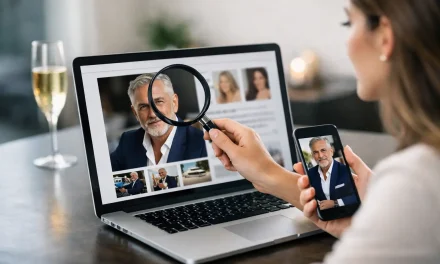

One bad match can waste your night. A good fake can waste your money, your privacy, and your patience.
The good news is most fake sugar daddy profiles follow the same script. They rush, overpromise, and crack the second you ask for proof.
If you’re in Sugar Dating, speed matters. You want to spot the nonsense early, before a chat turns into a problem.
Key Takeaways
- Trust patterns, not charm: Scammers thrive on urgency and empty promises; a real sugar daddy will not be offended by your caution or your request for proof.
- Watch for red flags: Be skeptical of profiles with stock photos, vague bios, or those that immediately push to move conversations to third-party messaging apps like WhatsApp or Telegram.
- Never pay to get paid: Genuine sugar dating never requires you to send money, pay a ‘clearance fee,’ or use suspicious payment links; any request for money is a major warning sign of a scam.
- Verify through action: Perform simple checks like asking for a short video chat or asking specific questions about their stated location to see if their story remains consistent over time.
Why fake Sugar Daddy profiles are so common
Sugar dating attracts real adults who want clear expectations, privacy, and respectful connections. Unfortunately, it also attracts sugar daddy scams because money is part of the conversation, and fast trust is easier to fake than earn. Often, a person will create a fake online profile to exploit the anonymity of the web, targeting users who are simply looking for a legitimate arrangement.
This environment creates an obvious opening. A scammer does not need to impress you forever. They only need to hook you long enough to gain access to your personal information, steal your phone number, or commit identity theft through made up fees and fraudulent payment requests. While niche dating sites have specific security measures, social media platforms are often higher risk areas because they lack the specialized oversight found on dedicated sugar dating sites.
This is why the question is not whether fake accounts exist. They do. The better question is whether a platform makes them harder to pull off. If you are weighing that bigger issue, this breakdown on are sugar dating sites legitimate is worth a look.
Some platforms do a better job than others. You may see verified badges, profile review, reporting tools, blocking, search filters, and even around the clock support. Those are good signs. Still, many dating platforms also state in their terms that they do not promise every member is real, truthful, or background checked. That is normal legal language, but it tells you something important: site tools help, but your own screening still matters more.
A serious Sugar Daddy profile also tends to fit the culture of a professional platform. If a profile pushes online only money, talks like a vending machine, or jumps straight to sending cash, that usually does not match how established sites operate. Many position their service around respectful, adult relationships, not instant transactions. So, do not treat every polished profile like a prize. Because of the prevalence of sugar daddy scams, treat every interaction like a claim that still needs proof.
The profile clues you can catch in under a minute
You can screen most accounts before you reply, as identifying a fake online profile is the best way to protect yourself. Real profiles usually feel lived-in, while fraudulent ones often feel airbrushed, empty, or weirdly generic.
Start with the basics. Look at the photos, then the bio, then the small details around them. You are not hunting for one single flaw. You are looking for a pattern.
Here is a quick screen you can use:
| What you see | What it usually means |
|---|---|
| Photos look too polished or oddly perfect | They are likely stock photos or AI-generated |
| One photo only, or all photos cropped tightly | A common catfishing technique to hide a stolen identity |
| Username has random numbers or nonsense words | It may be a throwaway account |
| Bio says almost nothing | Scammers keep it vague so the profile fits anyone |
| Claims huge wealth, little detail | Flash is easy, but consistency is hard to fake |
| Brand-new account with instant outreach | The scam starts before the profile gets reported |
The photo test catches a lot. If every image looks like a luxury advertisement, pause. Watch for skin that looks too smooth, backgrounds that do not make sense, and hands or jewelry that look slightly off. Many scammers rely on generic stock photos to appear wealthier than they are. AI-made photos are better than they were a year ago, but they still often miss the little human details.
Then read the bio like a skeptic. A real Sugar Daddy or Sugar Baby profile usually says something concrete, such as their city, schedule, interests, relationship style, or the specific kind of connection they want. Fakes hide in broad phrases because broad phrases never have to line up later.
Be wary of the classic Instagram sugar daddy scam, which often follows these exact patterns across multiple social platforms. If you are still sorting out what is normal and what is pure fiction, this piece on understanding Sugar Daddy arrangements helps you separate confidence from fantasy.
Finally, do not ignore location. A profile that says Miami, mentions LA restaurants, and uses photos with London landmarks is not mysterious. It is simply sloppy. By staying vigilant, you can effectively avoid sugar baby scams and focus on finding a genuine, safe, and respectful arrangement.
Message behavior that gives scammers away fast
A fake profile can look decent for 30 seconds, but the direct message history usually gives it away.
The first red flag is pace. Scammers move like they are late for a train. They call you beautiful before reading your profile, and they push aggressive allowance offers before learning your last name. They demand trust before doing anything to earn it through a direct message conversation.

Photo by Artem Podrez
Watch for patterns in every direct message you receive. These individuals want to leave the platform immediately. They ask for Telegram, WhatsApp, text, or email before you have had a normal exchange, and they often avoid simple questions. They paste long, scripted speeches that could fit any stranger, and they get romantic or possessive far too fast.
Then comes the part that matters most: the financial direction.
If you are the Sugar Baby, you should never have to send money first.
Many sugar daddy scams involve a fraudulent payment verification fee, clearance deposits, or requests for gift card scams to prove your identity. You should also be wary of Cash App scams, fake PayPal pending transaction notifications, or someone offering to use stolen credit cards or a suspicious bank transfer to send your funds. If they send you phishing links disguised as payment portals, do not click them. These are classic examples of sugar baby scams designed to steal your resources rather than provide support.
The FBI’s romance scam warning makes the same point regarding romance scammers. These bad actors often move chats off-platform, build quick trust, then use the details you share to target you more effectively.
Grammar can help, but do not make it your only filter. One typo means nothing, but a full pattern of awkward phrasing, copied lines, strange time gaps, and answers that ignore your questions means a lot more.
Pay close attention to any requests for personal information. If they want your bank login, home address, private email, employer, or ID before a basic video call, stop there. A scammer collects leverage first and invents reasons for their financial requests later.
How to verify a Sugar Daddy without making it weird
You don’t need a week-long investigation. You need a few calm checks, done early.
Start by keeping the conversation on a secure messaging platform until the basics line up. Better sites give you chat tools, blocking suspicious accounts, and support for a reason. Use them, as blocking suspicious accounts is one of the most effective ways to filter out bad actors. Some sites also let you control profile visibility through privacy settings, but don’t assume anything you upload stays locked down. Logged-in members may still see what you share, so be cautious about sharing personal information too early.
Then do four simple checks:
- Ask for a short video chat. Five minutes is enough to see if the person matches their photos. If they dodge your request for a video chat twice, believe the dodge.
- Ask small, specific questions. Where in the city do they usually meet? What is their schedule like? Do their answers match the profile, or does their story change?
- Reverse-search profile photos if something feels off, or look them up on professional social media platforms to see if their details align with their claims. The FBI even recommends researching photos and profile details when you suspect a scam. If you have already provided personal information to someone you suspect is fraudulent, you may need to report identity theft to the appropriate authorities immediately.
- Keep first-meeting plans boring and public. A coffee shop is better than a private address. If they insist on a strange payment method like an advance bank transfer, walk away.
You can also vet the site itself before you trust anyone on it. Look for profile review, reporting standards, visible rules, and real support access. These questions to ask before trusting a dating platform make that part easier.
A strong platform helps, but it doesn’t replace judgment. Even sites that promote verified members, active moderation, and live support usually leave final responsibility with you. That is why a calm verification habit matters more than a fancy profile.
The bigger safety rule is simple. If the story gets stronger while the proof gets weaker, back up. According to Scamwatch’s relationship scam guide, you should never assume someone online is who they claim to be until they have earned that trust with consistent behavior. Staying vigilant is the best defense against sugar daddy scams.
A real person who wants a real connection won’t get offended by basic caution. A fake one usually will.
Frequently Asked Questions
Can I trust a profile that has a ‘verified’ badge?
While a verification badge is a positive signal, it does not guarantee that the person is honest or safe. Some scammers can find ways around platform security, so you should always combine site-level verification with your own personal vetting process.
Why do scammers always want to leave the dating site quickly?
Scammers want to move you to private messaging apps to avoid the monitoring tools and moderation systems built into legitimate dating platforms. Once you are on a platform they control, they can more easily use phishing tactics or pressure you without the risk of being banned by site administrators.
What should I do if I suspect a profile is fake?
If you spot red flags, trust your gut and stop the conversation immediately. Do not provide any personal information, report the profile to the platform’s support team using their built-in tools, and block the user to prevent them from contacting you again.
Is it normal for a sugar daddy to ask for my banking information early on?
No, this is never standard practice. A legitimate arrangement involves getting to know each other first, and there is no reason for a potential partner to ask for your bank login or sensitive financial details before you have established a genuine, long-term connection.
Conclusion
Fake profiles succeed when you want the fantasy to be true more than you want the facts to be clear. That is the core of how sugar daddy scams operate. Whether you are a newcomer or an experienced user, both sugar baby scams and predator tactics thrive on the hope of easy money.
Always slow the pace, verify the details, and trust patterns over empty promises. Protect your personal information at all costs, and remain skeptical of unrealistic allowance offers that appear too good to be true. In the world of sugar dating, the safest move is also the smartest one: believe consistency, not charm.
The right sugar daddy will not punish you for asking normal questions. The wrong one will not survive them.